Gi vs No-Gi:
What Should
You Start With?
This debate comes up every week in every BJJ forum on the internet. Gi or no-gi for beginners? Which one should you start with? Which one will make you better faster?
The answer is simpler than most people make it. Here's exactly what to do and why.
What's the Actual Difference?
The gi is the traditional BJJ uniform — the thick jacket and pants. The jacket collar and lapels become grips. Sleeves become handles. The pants can be grabbed. The gi creates a completely different game of grips, chokes, and control that's specific to that fabric.
No-gi is BJJ in shorts and a rash guard. No fabric to grab. Grips go on wrists, ankles, necks. The pace is generally faster, the game is more wrestling-influenced, and the positions that work shift significantly.
- Fabric grips on collar, sleeve, pants
- Slower, more methodical pace
- More submission variety (collar chokes)
- Traditional BJJ game
- Better for competition fundamentals
- Easier to learn mechanics slowly
- Wrist, ankle, and body grips only
- Faster, more explosive pace
- Wrestling and submission grappling blend
- MMA-applicable
- Great for leg locks
- Less forgiving of mistakes
The Traditional Argument for Starting in Gi
The conventional wisdom in BJJ has always been: start in the gi. The reasoning is solid. The gi slows things down enough that you can actually learn what's happening. When someone passes your guard in the gi, they had to work through your grip breaks, your frames, your reactions. There were steps. You could follow them.
No-gi doesn't give you that luxury. Things happen faster. If you don't already have the mechanical foundation, you'll spend your rolls getting smashed without being able to figure out why.
The gi is also where the deepest technical game lives. Collar chokes, lapel guards, spider guard — these are positions that build precision and patience. White belts who spend their first year in the gi often develop cleaner mechanics than those who jump straight to no-gi.
The Case for No-Gi First (or Both)
Here's the counter-argument, and it's a real one: some people just hate the gi. The fabric, the washing, the fit, the formality of bowing in and out. For some people, no-gi just feels more like a sport they want to do.
If you hate the format you're training in, you won't train consistently. And consistency beats everything. A year of enthusiastic no-gi training beats six months of reluctant gi training followed by quitting.
Train in whatever format your gym primarily teaches, and do both if you can. But if you're choosing one to start and you have no strong preference — start in the gi.
The gi builds fundamentals that transfer to no-gi. The reverse is less true. Start where the learning is slowest and most intentional, then let no-gi speed up your game once you have a foundation to speed up from.
What to Wear for Each
For gi training you need, obviously, a gi. We cover the best beginner options in our gear guide — the Fuji All-Around is the standard recommendation.
For no-gi, you need compression shorts or fight shorts and a rash guard. The rash guard is the most important piece — it protects your skin from mat burns and keeps you from being gross to roll with.
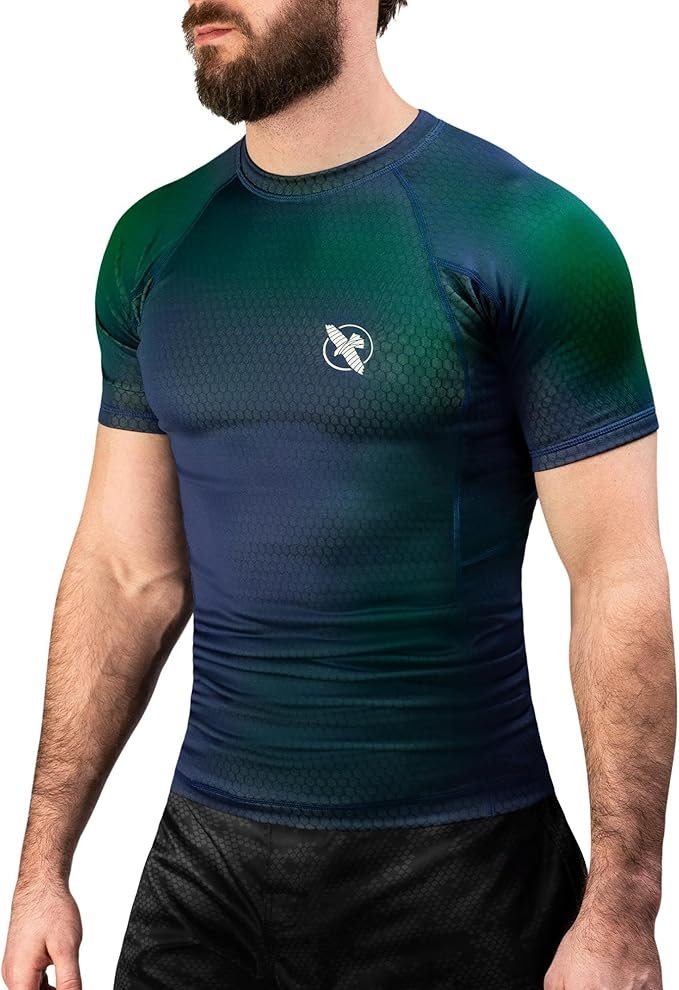
- Compression fit that stays put during rolls
- Protects skin from mat friction
- Anti-microbial fabric — stays fresh longer
- Long sleeve recommended for extra mat burn protection
Let your gym decide
which comes first.
What If Your Gym Does Both?
Most modern gyms run both gi and no-gi classes. If you have that option, the move is simple: go to both. The skills complement each other. Your no-gi will feel faster once you've built patience in the gi. Your gi game will get sharper when no-gi scrambles teach you to fight for position without fabric to rely on.
The people who get good fastest are almost always the ones who do both consistently. You don't have to choose forever — just start where you're most likely to stay consistent.
Our gear guide covers the best beginner gi and all the no-gi essentials. One stop.
See Our Gear Picks →